


Concrete Pickleball Court Line Marking Guide
A durable, accurate pickleball court starts with more than a tape measure and a can of paint. Whether you are converting a residential driveway, resurfacing a community court, or planning a dedicated outdoor play area, understanding official pickleball court dimensions line marking materials for concrete surface projects helps prevent layout errors, coating failure, and uneven play. For property owners working with Ace Coatings NC East, the goal is not just a court that looks good on day one, but one that performs consistently through heat, humidity, rain, and regular foot traffic.
Pickleball is a fast, precise game. A few inches of layout error can affect serves, kitchen play, and boundary calls. On concrete, the stakes are even higher because poor surface preparation or the wrong coating system can lead to peeling, slick lines, moisture issues, and premature wear.
This guide explains how to plan the court layout, choose the right marking materials, prepare concrete properly, and maintain clean, high-contrast lines for long-term playability.
Planning official pickleball court dimensions line marking materials for concrete surface layouts
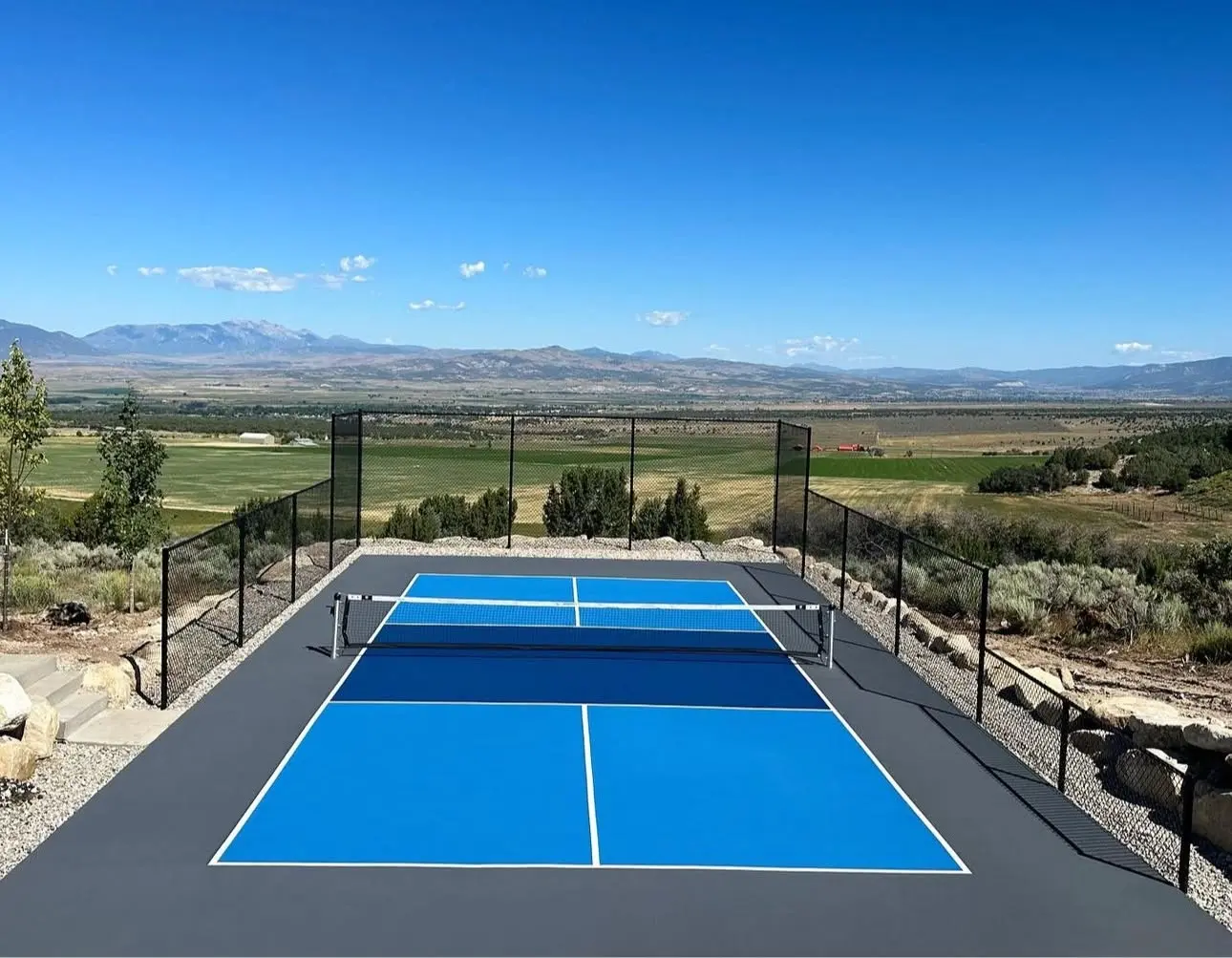
Before applying any coating, confirm the full court footprint. The standard pickleball playing area is 20 feet wide by 44 feet long for both singles and doubles. Lines are 2 inches wide, and those line widths are included in the court measurements.
The key layout areas include:
Baselines: The short boundary lines at each end of the court.
Sidelines: The long boundary lines running the full 44-foot length.
Non-volley zone: The 7-foot area on each side of the net, commonly called the kitchen.
Service courts: The left and right service boxes behind the kitchen line.
Centerlines: The lines dividing each side into two service areas.
USA Pickleball standards also recognize the importance of the surrounding run-off area. While the painted court is 20 by 44 feet, a comfortable recreational court should have a larger slab or playing surface. A 30 by 60-foot area is commonly treated as a practical minimum, while 34 by 64 feet gives players better room for movement, recovery steps, and safer play.
For backyard and community settings, this extra space matters. Players often step behind the baseline after deep returns, move laterally for wide shots, and need enough distance around the kitchen to avoid feeling crowded. A court that technically fits but lacks clearance can feel cramped, especially during doubles play.
Net placement should be checked during the layout phase, not after striping. Posts are typically positioned outside the sidelines, and the net height should measure 36 inches at the sidelines and 34 inches at the center. If the posts, sleeves, or portable net are misaligned, even perfectly painted lines will not create a professional playing experience.
Measuring official pickleball court dimensions line marking materials for concrete surface accuracy
The best court striping jobs begin with careful verification. Use a long fiberglass tape measure, chalk line, straightedge, and marking pencil or lumber crayon. Avoid relying on short household tape measures because small errors can compound across the court.
A professional layout process usually includes:
Marking the four outside corners first.
Measuring the full 20-foot width and 44-foot length.
Checking both diagonal measurements to confirm the court is square.
Snapping chalk lines only after dimensions are verified.
Marking all kitchen lines, centerlines, and service areas before taping.
One of the most common mistakes is forgetting that the 2-inch line width is part of the official measurement. For example, the outside edge of the sideline defines the court boundary. If tape is placed incorrectly, the finished court may end up slightly too wide, too narrow, or uneven across service boxes.
For multi-court layouts, spacing becomes even more important. Courts placed too close together can create safety concerns when players chase balls between adjacent playing areas. Walkways, fencing, lighting poles, gates, drainage paths, and spectator zones should be planned before coatings are installed.
Choosing official pickleball court dimensions line marking materials for concrete surface performance
Concrete is a strong base, but it is not automatically ready for sports coating. It is porous, moisture-sensitive, and often affected by curing compounds, oil, dust, mildew, or surface laitance. That means the line marking material must be selected as part of a full coating system, not as a standalone paint purchase.
For permanent outdoor courts, 100% acrylic sports coating is the preferred option. Standard exterior house paint is not designed for athletic movement. Pickleball involves quick stops, pivots, dragging toes, and repeated foot abrasion. A basic paint may look acceptable at first, but it can become slick, fade quickly, or peel under regular use.
A quality court line marking system should offer:
Strong adhesion to properly prepared concrete.
UV resistance for outdoor exposure.
Slip-resistant texture for player safety.
High contrast against the court color.
Flexibility to handle normal surface movement.
Compatibility with the base color coating.
For permanent courts, line marking tape is usually best reserved for temporary layouts, indoor events, or multi-use spaces where markings may need to be removed. Tape can shift, lift at the edges, collect dirt, or create a slight trip point over time. Painted acrylic lines are typically cleaner, longer lasting, and better suited for dedicated concrete courts.
Color selection also affects play quality. White lines remain the most common choice because they contrast well with blue, green, gray, and red court surfaces. The court body color should make the ball easy to see in bright sun, overcast conditions, and evening lighting.
Popular court color combinations include:
Blue playing area with green perimeter.
Dark green court with lighter green borders.
Slate gray playing area with charcoal surroundings.
Blue or green court body with crisp white striping.
In humid parts of North Carolina, coating choices should also account for moisture, shaded areas, pollen, and storm runoff. A contractor such as Ace Coatings NC East can evaluate whether a slab needs additional cleaning, crack repair, patching, or primer before the color and line system is installed.
Preparing official pickleball court dimensions line marking materials for concrete surface adhesion
Surface preparation is the step most likely to determine whether the court lasts. Even premium materials can fail if applied over dirty, damp, sealed, or poorly profiled concrete.
New concrete should cure fully before coating. In many cases, that means waiting at least 28 days, though weather, mix design, and site conditions can affect timing. Coating too early can trap moisture and interfere with adhesion.
For existing concrete, preparation should include:
Removing dirt, dust, grease, oil, mildew, and loose coating.
Pressure washing the surface thoroughly.
Repairing cracks, chips, and low spots.
Checking for drainage problems or standing water.
Creating a suitable surface profile through approved methods.
Allowing the slab to dry before applying primers or coatings.
A simple moisture check can help identify risk before coating. Tape a square of clear plastic tightly to the concrete and leave it in place for about 24 hours. If condensation appears underneath or the concrete darkens, the slab may be releasing moisture. In that case, additional evaluation or a moisture-mitigation primer may be needed.
Texture is another key factor. Concrete that is too smooth may not give coatings enough grip, while concrete that is too rough can create uneven lines and uncomfortable play. The surface should be prepared to accept a court coating system while still supporting consistent ball bounce and safe player movement.
Maintaining official pickleball court dimensions line marking materials for concrete surface results
Once the court is painted, maintenance helps protect both appearance and performance. Outdoor courts collect dirt, leaves, pollen, algae, and shoe debris. If that buildup remains on the surface, it can make lines appear dull and reduce traction.
Routine maintenance should include:
Sweeping or blowing debris off the court regularly.
Washing the surface with mild cleaner when needed.
Removing leaves and organic debris before staining occurs.
Keeping sprinklers from repeatedly soaking the court.
Addressing cracks or coating wear before they spread.
Avoiding harsh chemicals that can damage acrylic coatings.
Drainage is especially important on concrete courts. Standing water can shorten coating life, encourage mildew, and leave mineral deposits. After heavy rain, observe whether puddles remain. Small birdbaths may be repairable during resurfacing, but significant drainage issues should be addressed before repainting lines.
Re-striping is usually needed when lines become faded, stained, worn, or difficult to see during play. Before re-striping, do not simply paint over failing material. Loose paint should be scraped or sanded, the surface should be cleaned, and old lines should be checked against the correct layout. This is also a good time to confirm that previous markings were accurate.
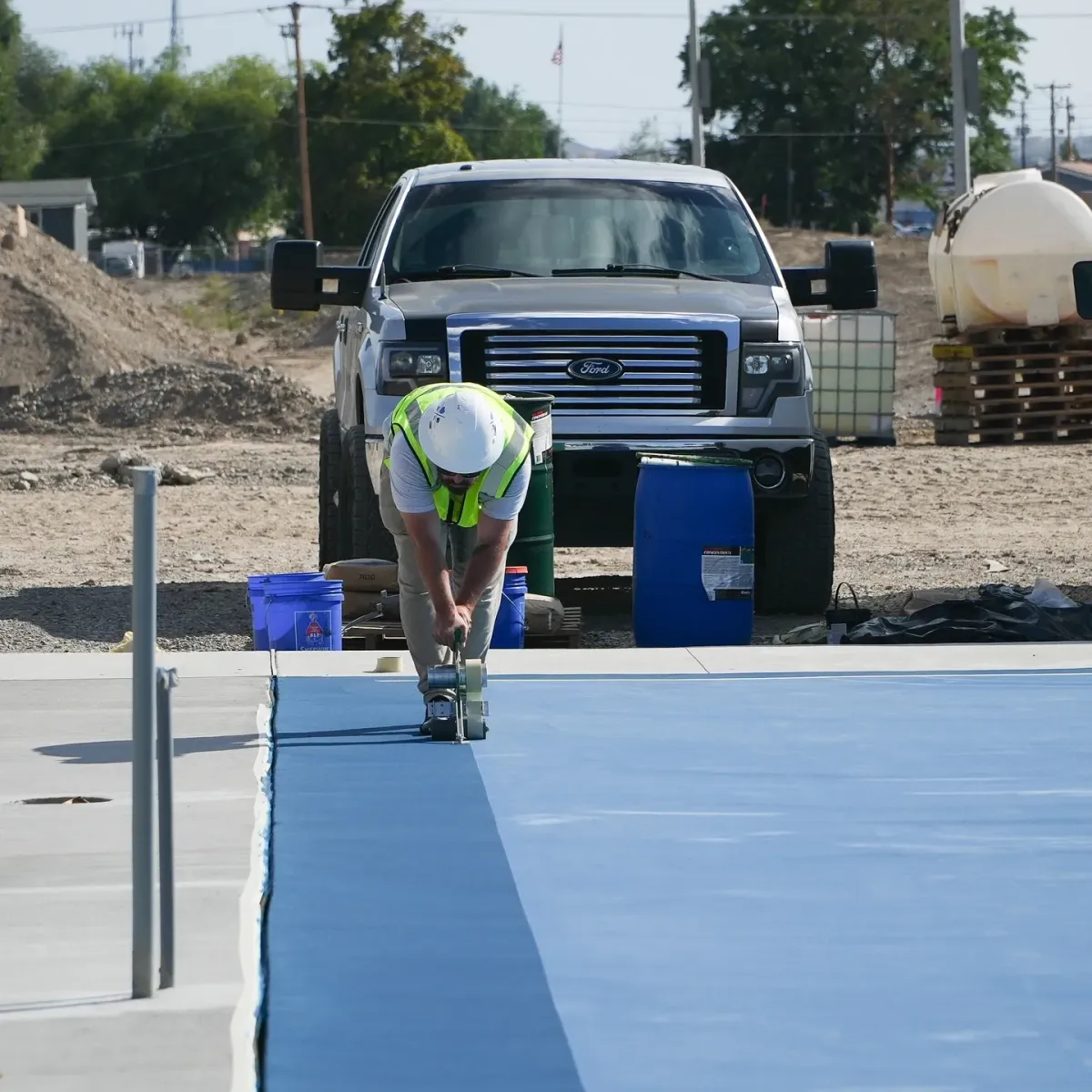
For crisp new lines, professional installers often seal the tape edge before applying the final line color. This means rolling a thin coat of the surrounding court color along the tape edge first. If any coating seeps under the tape, it matches the base color and seals the gap. The line color is then applied over it, creating a sharper finished edge when the tape is removed.
Finishing official pickleball court dimensions line marking materials for concrete surface projects
The final stage is where patience matters. Line paint should usually be applied in thin, even coats rather than one heavy coat. Heavy applications can dry unevenly, create ridges, and increase the risk of tearing when tape is removed.
Use rollers sized appropriately for 2-inch court lines, and keep coverage consistent. After the final coat, tape should often be pulled while the coating is still slightly tacky, depending on product instructions. Pulling at a 45-degree angle can help reduce edge damage.
Before opening the court for play, allow the coating system to cure according to manufacturer recommendations. Dry-to-touch does not always mean ready for athletic traffic. Premature play can scuff fresh coatings, mark the surface, or reduce long-term durability.
A well-finished concrete pickleball court should deliver:
Clean, high-contrast lines.
Correct court geometry.
Consistent bounce.
Safe traction.
Durable color.
A professional appearance that holds up under regular use.
Building or resurfacing a pickleball court is an investment in recreation, property value, and community use. The best results come from treating layout, preparation, materials, and maintenance as one connected system. When the concrete is properly prepared and the markings are applied with precision, players get a court that feels fair, looks sharp, and supports better games year after year.
For homeowners, parks, schools, HOAs, and recreation facilities, Ace Coatings NC East brings practical surface knowledge to the planning process so the finished court is built for real playing conditions, not just a fresh photo on installation day.
Contact us at Ace Coatings NC East to discuss concrete pickleball court layout, resurfacing, line marking, or coating options for your property.
