


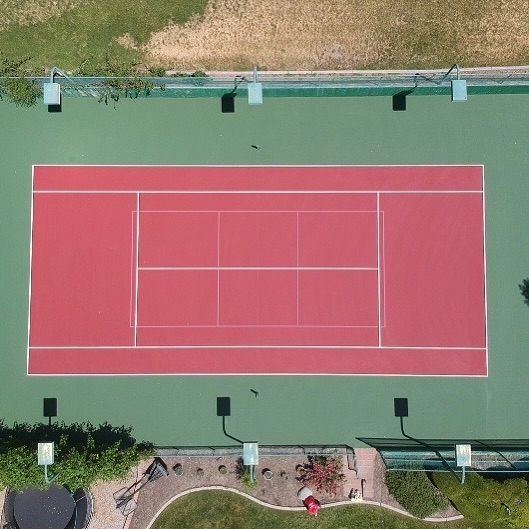
Pickleball Court Dimensions Guide for Better Court Planning
Pickleball Court Dimensions matter whether you are laying out a temporary driveway court, converting an underused tennis court, or planning a permanent outdoor surface for a home, school, HOA, church, park, or recreation facility. The game may be approachable, but the court layout is precise. A few inches in the wrong direction can affect serving angles, kitchen play, ball response, and player safety.
A standard pickleball court is smaller than a tennis court, which is one reason the sport works well for residential and community spaces. However, smaller does not mean simpler. A quality court still needs accurate measurements, safe clearance, proper slope, durable surfacing, and a layout that supports real movement during play.
In Eastern North Carolina, court planning also has to account for weather. Rain, humidity, coastal air, tree debris, and seasonal storms can all affect how a court should be graded, surfaced, and maintained. A court that looks right on paper still needs to perform after heavy rain and through long humid summers.
Ace Coatings NC East helps property owners think beyond the painted lines by considering the full court environment: dimensions, drainage, base preparation, surface texture, safety zones, and long-term upkeep.
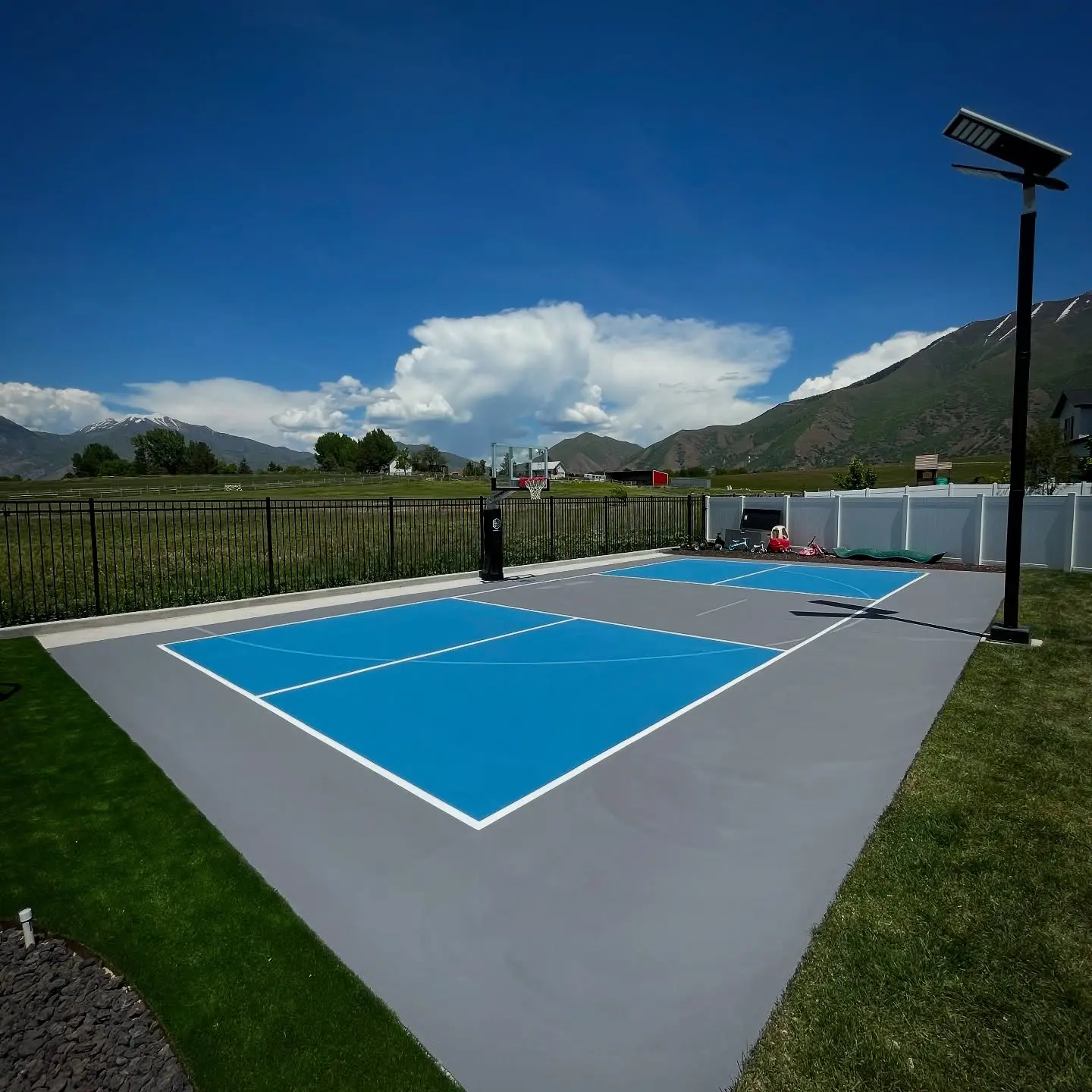
Why Pickleball Court Dimensions matter before construction begins
The official pickleball playing area measures 20 feet wide by 44 feet long. These measurements apply to both singles and doubles play. Unlike tennis, pickleball does not use wider doubles alleys or a separate singles court width. Everyone plays inside the same outer boundary lines.
Those outer dimensions are only the playing lines, not the full construction footprint. Players need room behind the baselines and outside the sidelines to serve, move, recover, and chase angled shots. For a comfortable recreational court, many builders plan for an overall paved or coated area of about 30 feet by 60 feet. For more competitive play or multi-court facilities, a larger pad may be preferred.
The key zones include:
Baselines: The back boundary lines, each 20 feet wide
Sidelines: The long boundary lines, each 44 feet long
Centerlines: Lines that divide each side into left and right service courts
Non-volley zone lines: The lines that create the kitchen
Service courts: The areas where serves must land diagonally
Net line: The center point dividing the court into two equal halves
The net divides the court into two 22-foot halves. On each side, the non-volley zone extends 7 feet from the net. Behind that, the left and right service courts are each 10 feet wide and 15 feet deep.
Line width also matters. Court lines are typically 2 inches wide and should be included within the overall measurements. The color should contrast clearly with the court surface so players can make quick calls during play.
How Pickleball Court Dimensions affect the kitchen, net, and service boxes
The kitchen, officially called the non-volley zone, is one of the most important parts of the court. It extends 7 feet back from the net on each side and spans the full 20-foot width. This creates a 14-foot total non-volley area across the middle of the court.
Players may enter the kitchen, but they cannot volley the ball while standing in it or touching its boundary line. This rule is what keeps the game from becoming dominated by close-range smashing. It encourages softer shots, controlled dinks, smart placement, and patience.
The net should measure 36 inches high at the sidelines and 34 inches high at the center. That slight center drop is intentional and affects shot selection. Many players aim drives or passing shots through the middle because the net is lower there.
For service boxes, each side of the court is divided into two equal rectangles. The centerline splits the 20-foot width into two 10-foot-wide service areas. Each service box runs 15 feet from the baseline to the kitchen line. Accurate service box layout helps preserve the rhythm and fairness of the game.
How Pickleball Court Dimensions influence site layout and safety space
When planning a permanent court, the full footprint matters as much as the official playing lines. A court painted exactly 20 feet by 44 feet with no surrounding space will feel cramped and unsafe. Players need overrun room for serves, lobs, wide shots, and quick recovery steps.
A practical recreational layout usually includes at least 5 feet of clear space outside each sideline and 8 to 10 feet behind each baseline. More space is better when the court will be used by competitive players, seniors, youth programs, or groups with mixed skill levels.
Safety space should be free from:
Fences placed too close to the baselines
Retaining walls or raised borders
Benches, planters, or equipment storage
Low branches or landscaping hazards
Uneven pavement transitions
Drainage grates in active play zones
Light poles or net posts without proper padding
Outdoor court orientation also deserves attention. A north-south orientation is often preferred because it reduces direct sun glare during morning and late-afternoon play. In Eastern North Carolina, shade, wind exposure, and nearby trees should also be evaluated. Trees can help with comfort, but they can also drop leaves, pine needles, sap, pollen, and organic debris that stain the surface or hold moisture.
Indoor and outdoor courts use the same playing dimensions, but the surrounding conditions differ. Indoor courts need adequate ceiling height for lobs, proper lighting placement, and enough space between courts. Outdoor courts need slope, drainage, UV-resistant coatings, and surfaces that can handle humidity and weather exposure.
For multi-court facilities, spacing between courts is critical. Too little separation creates safety risks when players chase balls across adjacent courts. Walkways, fencing, gates, seating, and spectator areas should be planned early instead of squeezed in later.
Why Pickleball Court Dimensions are different from tennis court planning
Pickleball and tennis share some visual similarities, but the layouts are very different. A doubles tennis court is 36 feet wide by 78 feet long, while a pickleball court is 20 feet wide by 44 feet long. Because of that size difference, one tennis court footprint can often be converted into multiple pickleball courts if the base is in good condition and there is enough safe spacing.
A tennis-to-pickleball conversion may include:
Cleaning and evaluating the existing surface
Repairing cracks, birdbaths, or low spots
Adjusting or replacing net posts
Applying acrylic resurfacing
Painting new pickleball lines
Adding fencing, gates, or court dividers
Improving drainage around the court perimeter
Badminton courts share the same outer dimensions as pickleball courts, but the interior lines and net height are different. A badminton court does not include the pickleball kitchen layout, and its net is much higher. That means the outer rectangle may be useful as a reference, but the court still needs proper pickleball striping and net setup.
For permanent construction, the safest approach is to treat pickleball as its own sport with its own layout, movement patterns, and surfacing needs. A court designed only as a smaller tennis court may not deliver the playing experience pickleball players expect.
Building around Pickleball Court Dimensions for long-term performance
Accurate layout is only one part of building a court that lasts. The surface must also drain properly, resist weather exposure, and provide the right amount of traction. In Eastern North Carolina, drainage is especially important because rain and humidity can shorten the life of a poorly planned outdoor court.
A pickleball court should have a subtle, consistent slope to move water off the playing surface. The slope should be gentle enough that players do not notice it during play but effective enough to prevent standing water. Low spots, commonly called birdbaths, can create slippery areas, discolor the coating, and weaken the surface over time.
The base may be concrete or asphalt, depending on the site, budget, and intended use. Concrete often provides strong long-term stability when properly installed and reinforced. Asphalt can be useful in certain applications but may require more frequent maintenance over time. In either case, the base should be smooth, stable, and compatible with sport surfacing.
Acrylic sport coatings are commonly used for outdoor pickleball courts because they provide color, traction, and consistent ball response. The surface texture is created with fine aggregate in the coating system, helping players move confidently without making the court overly abrasive.
Cushioned acrylic systems are another option. These systems add impact-absorbing layers beneath the color coats, which can be helpful for residential courts, active adult communities, and facilities where comfort is a priority.
USA Pickleball provides official guidance on court dimensions and rules, but a durable outdoor court also depends on local construction knowledge. That includes understanding soil movement, drainage routes, surrounding landscape, sun exposure, and maintenance needs.
How Pickleball Court Dimensions guide backyard and community court decisions
The best court layout depends on how the space will be used. A private backyard court may prioritize family play, appearance, and comfort. A church, HOA, school, or public recreation facility may need multiple courts, accessible pathways, fencing, seating, and long-term maintenance planning.
Before building, property owners should ask:
Is there enough space beyond the official court lines?
Will the court be used for casual play or competitive games?
Does the site drain well after heavy rain?
Is the base new construction or an existing surface conversion?
Will lighting be added now or later?
Are there neighbors, setbacks, or HOA rules to consider?
Is the court close to trees, irrigation, or low-lying areas?
What level of maintenance is realistic?
Temporary courts can be useful for testing a space before committing to construction. A driveway or paved area can be taped with the 20-by-44-foot layout, provided there is enough room to move safely. Painter’s tape, vinyl court tape, or temporary court markers can help create a practice setup without permanently marking the surface.
For a permanent court, however, professional layout and surfacing are worth the investment. Accurate measurements, clean lines, proper coating thickness, and well-planned slope make the court safer and more enjoyable. They also reduce the likelihood of premature repairs.
Routine maintenance helps protect the court after installation. Keep leaves, pine needles, soil, and standing water off the surface. Rinse the court periodically with clean water, use mild detergent for stains, and avoid aggressive pressure washing that can damage acrylic coatings. Inspect the court seasonally for cracks, low spots, fading, or drainage issues.
A pickleball court is at its best when the geometry, construction, and maintenance all work together. The 20-by-44-foot playing area creates the strategy of the game, but the full court environment creates the experience.
Ace Coatings NC East brings a sports-surface perspective to court planning by helping property owners connect the official measurements with the practical realities of outdoor construction in Eastern North Carolina.
