

Pickleball Court Coating Lifespan Guide
Home Improvement, Pickleball Courts
How Long Does Pickleball Court Coating Last?
If you are investing in a backyard or community pickleball court, one of the first questions you will have is how long the court coating will actually last. Understanding coating lifespan helps you plan your budget, maintenance schedule, and expectations for play quality over time.
Typical Lifespan of Pickleball Court Coatings
Most standard acrylic pickleball court coatings last 5 to 8 years before they need a full resurfacing. That is the general rule of thumb professionals share with homeowners and communities. However, this range can stretch in either direction depending on several factors such as climate, how often you play, and how well the court is maintained.
In ideal conditions, with moderate use and proper care, it is realistic for a quality coating system to reach the upper end of that range and sometimes even approach 10 years. On the other hand, a heavily used or neglected court in a harsh climate might show significant wear in as little as 3 to 4 years, especially if the underlying asphalt or concrete was not prepared correctly. Working with an experienced installer such as Ace Coatings NC East can help ensure the coating system is designed and applied for maximum durability from day one.
📌 Key Takeaway: For most residential and community courts, plan for a resurfacing cycle roughly every 5–8 years, then adjust based on how your court actually wears.
What Affects How Long a Court Coating Lasts?
1. Quality of Materials and Installation
Not all coatings are created equal. Professional-grade acrylic systems designed specifically for pickleball and tennis courts contain carefully balanced acrylic resins, sand, and pigments. These are engineered to provide traction, color stability, and flexibility. Cheaper paints or “do-it-yourself” products may look good at first but tend to fade, chalk, and wear much faster, sometimes within a couple of seasons of frequent play.
Installation also matters. A properly cleaned, repaired, and primed base gives the coating something solid to bond to. If the contractor skips crack repair, drainage corrections, or surface preparation, the coating can peel, bubble, or wear unevenly long before its expected lifespan is up.
2. Climate and Sun Exposure
Weather is one of the biggest influences on how long your pickleball court coating will last. Harsh UV exposure, especially in hot, sunny regions, can gradually fade colors and dry out the surface. Freeze–thaw cycles in colder climates can cause tiny cracks in the base, which eventually telegraph through the coating and shorten its life if not addressed early.
Courts that sit in full sun all day typically age faster than those with partial shade, though constant shade can create moisture problems and encourage mold if drainage is poor. Wind-blown sand, dust, and debris can act like sandpaper under players’ shoes, slowly wearing down the textured surface over time. For detailed construction and surfacing standards tailored to different climates, many owners refer to guidelines from USA Pickleball.
3. Amount and Type of Play
A private backyard court used a few times a week by family and friends will experience much less wear than a busy club or public facility hosting daily leagues and tournaments. More players mean more foot traffic, more pivoting, and more friction on the surface. That does not mean you should limit your fun, but it does mean you should be realistic about resurfacing more often if your court is heavily used.
The type of footwear also plays a role. Proper court shoes are designed with non-marking soles that interact gently with the acrylic coating. Hard, aggressive soles, hiking boots, or everyday sneakers with rough tread can accelerate wear, especially in high-traffic areas like the baseline and kitchen line.
4. Routine Maintenance and Care
Simple, consistent maintenance can easily add a couple of extra years to your coating’s lifespan. Regularly blowing or sweeping off leaves, dirt, and small stones prevents abrasive particles from grinding into the surface. Promptly cleaning up standing water and organic stains helps avoid discoloration and slippery spots. Inspecting and sealing small cracks early stops water from getting into the base and causing bigger structural problems later.
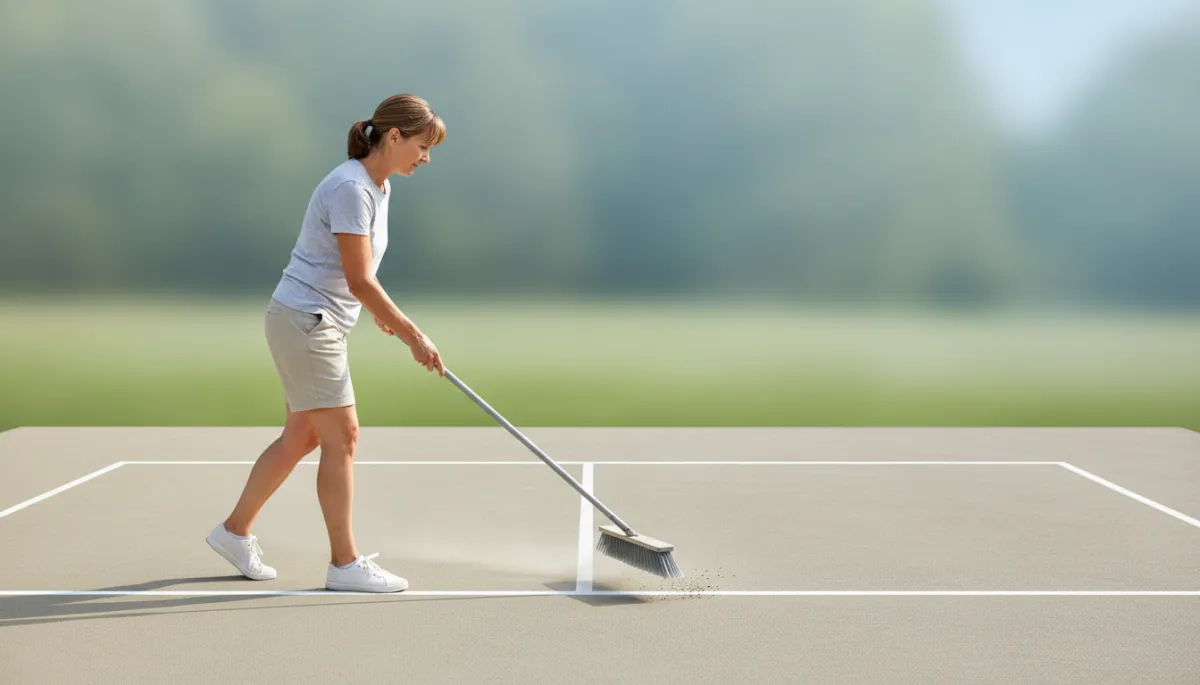
Light, regular cleaning slows surface wear and helps court coatings last longer.
💡 Pro Tip: Set a simple schedule—quick weekly sweeping plus a gentle wash every month or two can significantly extend the life of your coating.
Signs Your Pickleball Court Coating Is Wearing Out
Even with good care, every court coating eventually reaches the end of its useful life. Watch for these common signs that it may be time to resurface:
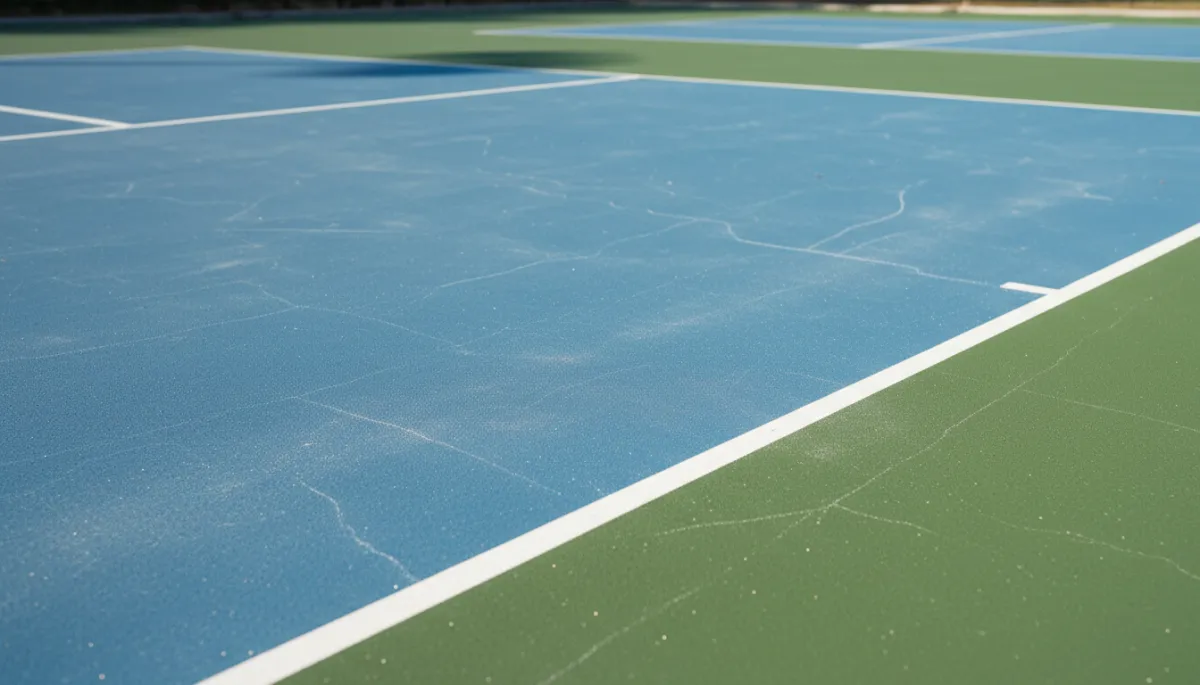
Color fading and chalking: The surface looks dull, dusty, or washed out compared to its original tone.
Slick or “bald” spots: Areas where texture has worn down, reducing traction and changing ball bounce.
Visible cracks and low spots: Structural issues in the base showing through the coating, often holding water after rain.
Peeling or flaking: Sections where the coating is lifting away from the asphalt or concrete below.
Addressing these problems early—sometimes with localized repairs or an additional topcoat—can buy you time before a full resurfacing is necessary. However, once the surface feels inconsistent underfoot or affects play quality, a complete recoating is usually the safest and most satisfying option.
How to Get the Longest Life from Your Court Coating
To maximize how long your pickleball court coating lasts, think of the project as a system rather than just a layer of paint. Start with a stable base, choose a reputable installer, and opt for high-quality acrylic products designed for sport surfaces. Ask about added UV protection, proper crack repair methods, and recommended maintenance routines before the work begins so you know what to expect afterward.
Once your court is finished, protect your investment with good habits: limit non-sport footwear, move heavy furniture or equipment carefully, and keep sharp objects off the surface. Schedule a quick professional inspection every few years, especially if you notice changes in drainage, bounce, or traction. These small steps help you stay closer to the 8–10 year end of the lifespan range instead of the 3–4 year end.
Final Thoughts: Plan for Longevity, Enjoy Every Game
In most situations, you can expect a well-installed pickleball court coating to last around 5–8 years, with the potential for a longer life if you choose quality materials and care for the surface. Understanding what affects that lifespan—weather, usage, maintenance, and installation quality—puts you in control of your court’s future. With realistic expectations and a simple care routine, you will enjoy years of reliable play before it is time to resurface and refresh your court for the next chapter of games, rallies, and friendly competition.
