

Basketball Court Resurfacing: How Often Is Needed?
Home Improvement, Sports Courts, Basketball
How Often Should a Basketball Court Be Resurfaced?
Whether it is the driveway hoop your kids use every afternoon or a full-size backyard court for family games, the surface under your feet matters more than you might think. Resurfacing at the right time keeps the court safe, comfortable to play on, and looking sharp—without paying for major repairs you could have avoided.
The Short Answer: Every 4–8 Years for Most Home Courts
For a typical outdoor residential basketball court, a good rule of thumb is to resurface every 4 to 8 years. That range is wide because how often you need resurfacing depends on:
How often you play (light family use vs. daily games)
Local climate (harsh winters, hot summers, or lots of rain)
The quality of the original installation and coatings
How well you keep up with basic maintenance and cleaning
If your court is lightly used, in a mild climate, and was built with high-quality coatings, you might comfortably wait closer to 7 or 8 years. Busy courts in tough weather conditions may need attention closer to the 4-year mark—or even sooner if problems are ignored.
Signs Your Basketball Court Needs Resurfacing Now
Instead of relying only on the calendar, watch for visible and performance-related signs that your court is ready for a refresh. Common red flags include:
Cracks and small gaps in the asphalt or concrete that are starting to spread or connect
Faded, peeling, or chalky color that makes the court look tired and can expose the base surface to the elements
Puddles or “birdbaths” where water sits after rain, indicating low spots or worn coatings
Slick or overly rough texture that changes how the ball bounces or increases the risk of slips and scrapes
Lines that are hard to see, making it tough to judge three-pointers, free throws, or out-of-bounds plays
💡 Pro Tip: Tiny cracks are easiest and cheapest to repair when caught early. Waiting until they widen or spread can mean deeper structural work instead of a simple resurfacing.
How Climate and Use Change Your Resurfacing Schedule
Outdoor courts live through everything your weather can throw at them, and that has a big impact on how often you should resurface. In areas with freeze–thaw cycles, water can seep into tiny surface flaws, freeze, expand, and slowly pry the court apart. Intense sun, on the other hand, can cause coatings to fade and dry out faster, especially on darker colors.
Heavy use adds another layer. If your driveway court doubles as the neighborhood hangout, or if it hosts regular pickup games, the constant foot traffic and ball impact will wear the surface more quickly. In those cases, you might find that a 3–5 year resurfacing cycle keeps the court feeling fresh, safe, and responsive.

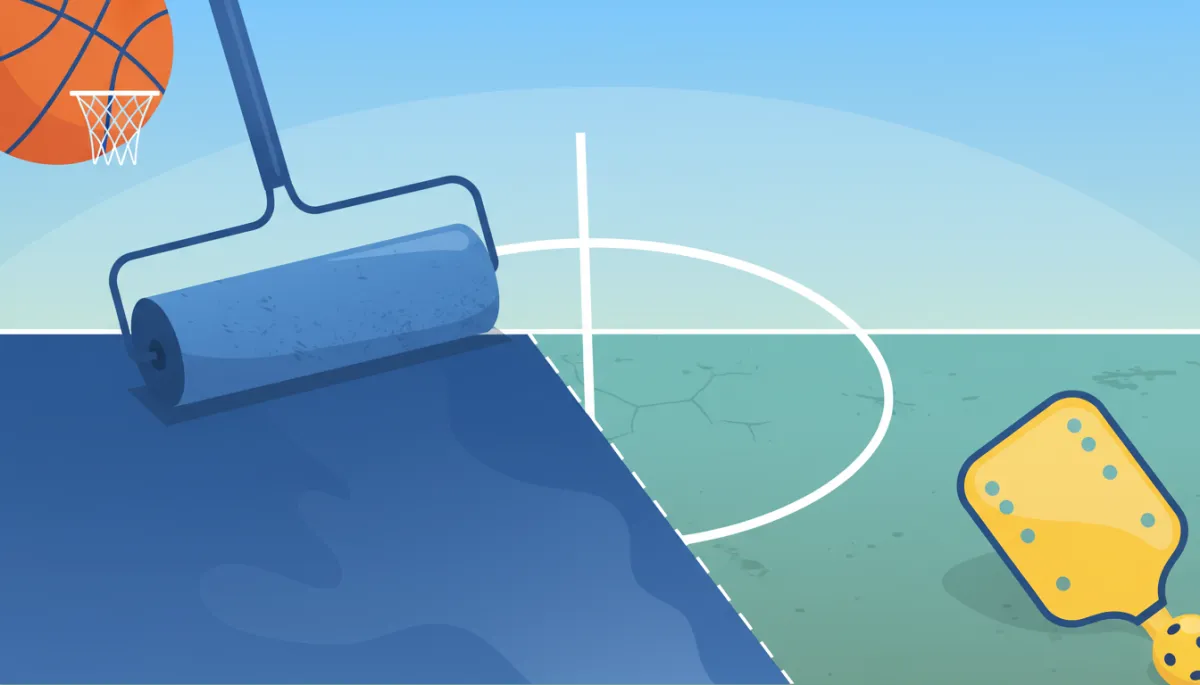
Early resurfacing tackles small flaws before they turn into costly structural damage.
Indoor vs. Outdoor Courts: Different Needs, Same Goal
Indoor basketball courts, often hardwood, follow a different maintenance pattern than outdoor asphalt or concrete. Indoors, you might be looking at annual screening and recoating, with full sanding and refinishing every several years, depending on traffic. Outdoors, the focus is on protecting the base surface from moisture, UV rays, and temperature swings with high-quality acrylic or specialty sports coatings.
The goal is the same in both cases: a safe, consistent playing surface that looks great and allows for predictable ball bounce and good traction. Many of the same principles used in tennis and pickleball court construction and resurfacing—like those outlined by USA Pickleball —also apply to basketball courts, especially when it comes to slope, drainage, and coating systems.
Stretching the Life of Your Court Between Resurfacings
Simple habits can significantly extend the time between major resurfacing projects. Consider:
Sweeping or blowing off leaves, dirt, and debris regularly so they do not trap moisture against the surface
Rinsing off spills or stains and avoiding harsh chemicals that can damage coatings
Trimming nearby trees and shrubs to limit roots and reduce organic debris, sap, or shade-related moisture
Addressing small cracks and low spots as soon as you notice them, rather than waiting “until next season”
📌 Key Takeaway: Regular light maintenance costs very little, but it can add years of life to your court and delay the need for a full resurfacing.
When to Call in a Professional
Minor cleaning and upkeep are great DIY projects, but full resurfacing is usually best left to experienced court specialists. They can evaluate the base, repair structural issues, recommend the right coating system, and apply it correctly so it performs for years. If you are unsure whether your court needs simple repairs or a full resurfacing, a professional inspection—and a clear, written estimate—can give you peace of mind and help you plan your budget.
If you are ready to talk through your options, reach out to Ace Coatings NC East for guidance on timing, products, and the best resurfacing plan for your home court.
Final Thoughts: Think in Seasons, Not Just Years
While “every 4–8 years” is a helpful guideline, the smartest approach is to check your basketball court at the start and end of each playing season. Walk it, bounce a ball, look closely at the surface, and note any changes. When you catch wear early, resurfacing becomes a planned upgrade instead of an emergency repair—and your court stays safe, attractive, and game-ready for every tip-off.
